If you spend time on social media or chat apps like WhatsApp Instagram Snapchat or TikTok, you’ve probably seen the abbreviation S/U and wondered what it means
. Like many internet slang terms it looks confusing at first but it’s actually simple once you understand the context.
Most people search for S/U meaning in text because they see it in stories, captions, or messages and can’t figure out if it’s an abbreviation slang or a typo.
The truth is that S/U can have more than one meaning depending on where and how it is used. In most casual texting situations, it is commonly used as a short form for “Swipe Up”, especially on Instagram and Snapchat stories.
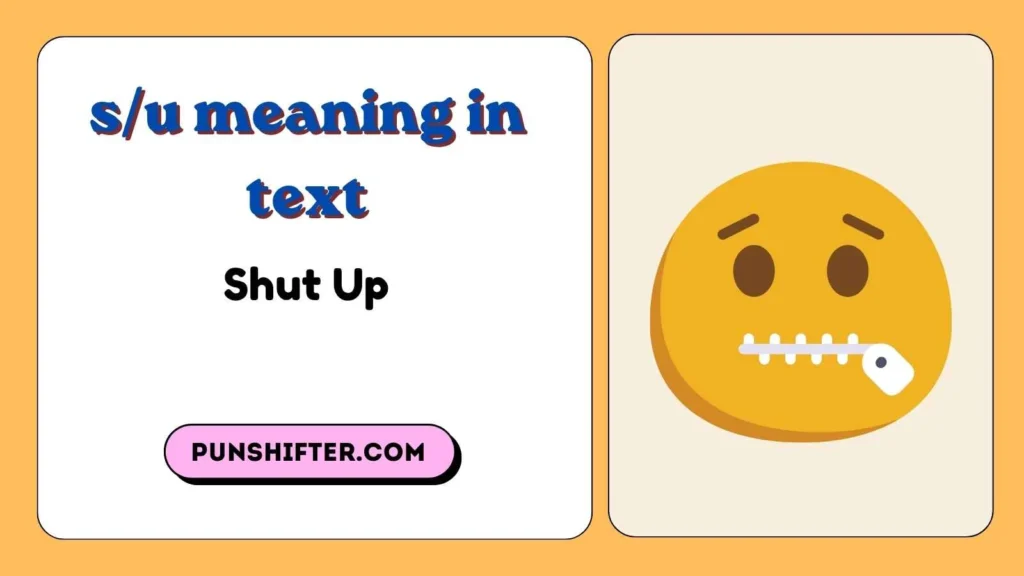
In other contexts it may also mean Shut Up though this usage depends heavily on tone and relationship between users.
Because of these variations understanding S/U requires looking at context carefully. In this guide, we’ll break down everything about S/U meaning usage trends and real-life chat examples in a simple and easy way.
What Does S/U Mean in Text?
The meaning of S/U in text messages depends on context, but the most common interpretations are:
- Swipe Up (most popular meaning on Instagram/Snapchat)
- Shut Up (informal/chat slang, sometimes joking or rude depending on tone)
- See You (rare usage in some casual chats)
In modern social media communication, “S/U” is mostly linked with “Swipe Up”, a feature used in Instagram Stories where creators ask viewers to swipe up to visit a link. Even though Instagram has replaced swipe-up links with link stickers, the term is still widely used in captions and older habits.
Quick meaning breakdown:
- 📲 Instagram Story: “S/U” = Swipe Up
- 😆 Chat slang: “S/U” = Shut Up (joking or teasing)
- 👋 Casual goodbye (rare): “S/U” = See You
Because slang evolves quickly, the meaning can shift depending on who is using it and where it appears.
Full Form Stands For & Short Meaning of S/U
Here’s a simple breakdown of what S/U stands for in texting and social media:
Full Forms:
- Swipe Up
- Shut Up
- See You (less common)
Short Meaning:
- A quick abbreviation used in chats or social media posts to save time and space.
Most Common Usage Today:
- “Swipe Up” → used in marketing, influencers, and story posts
Example:
- “New video out! S/U to watch 🔥” → meaning Swipe up to watch
Even though social media platforms have changed features over time, abbreviations like S/U remain popular because users continue using familiar slang even after updates.
Origin, History & First Known Use of S/U
The abbreviation S/U originated from early internet and mobile texting culture, where users shortened phrases to type faster on small keyboards.
Early Usage:
- First appeared in SMS texting era (early 2000s)
- Became popular in social media marketing later
- Widely used in Instagram Stories during the “Swipe Up” feature era
Why it became popular:
- Faster communication
- Easier engagement in stories
- Influencer marketing language
As Instagram and Snapchat grew, “S/U” became part of digital content culture, especially among influencers asking followers to interact with links or content quickly.
Even today, despite UI changes, people still use the abbreviation out of habit.
How People Use S/U in Daily Conversations
In daily texting, S/U is used in a very casual and flexible way. It often depends on tone and relationship.
Common uses:
- Asking someone to check a link
- Teasing friends (if meaning “Shut Up”)
- Ending a conversation quickly
Examples:
- “S/U on my new post 🔥”
- “S/U bro, you’re joking 😂”
- “I’m leaving now, s/u later”
Key point:
The meaning is always dependent on context, so misunderstanding can happen if tone is unclear.
S/U Meaning Across WhatsApp, Instagram, TikTok & Snapchat
📸 Instagram:
Most commonly means Swipe Up or link interaction in stories.
💬 WhatsApp:
Can mean Shut Up jokingly or playfully between friends.
🎵 TikTok:
Used in captions like “S/U for full video” meaning check link or profile.
👻 Snapchat:
Originally linked with swipe-up story actions and still used in casual slang.
Each platform gives S/U a slightly different meaning, but Instagram remains the strongest influence.
Different Meanings of S/U in Other Fields
Outside of social media, S/U can also have different meanings:
- 📚 Education: “S/U grading system” = Satisfactory/Unsatisfactory
- 🏦 Business: May refer to internal short codes
- 💻 Tech chats: Sometimes used as shorthand commands
However, these meanings are less common in everyday texting.
Common Confusions, Mistakes & Wrong Interpretations
Many users misunderstand S/U meaning in text because:
- They think it always means “Shut Up”
- They confuse it with “SU” (without slash)
- They assume it is a typo
Common mistakes:
- Misreading tone in chats
- Using it incorrectly in formal messages
- Mixing it with unrelated abbreviations
Important tip:
Always check the context before reacting to “S/U”.
Similar Terms, Alternatives & Related Slang
Here are some similar abbreviations:
- “SW” = Swipe Up (variant)
- “LOL” = Laugh Out Loud
- “BRB” = Be Right Back
- “TTYL” = Talk To You Later
- “STFU” = Stronger version of shut up (informal/slang)
These all belong to the same digital texting culture.
Examples of S/U in Real Chat Situations
Example 1:
A: “Check my new vlog 🎥”
B: “S/U bro 🔥”
Example 2:
A: “You’re lying 😂”
B: “S/U man I’m serious”
Example 3:
Instagram Story:
“New drops live now 😍 S/U”
These examples show how flexible the term is.
How to Reply When Someone Says S/U
Your reply depends on meaning:
1:If it means “Swipe Up”:
- “Done 👍”
- “Just checked 🔥”
- “Link works!”
2:If it means “Shut Up” (joking):
- “Make me 😂”
- “No way 😆”
- “Haha okay chill”
3:If unclear:
- “What do you mean by S/U?”
Is S/U Still Popular? Trends & Online Usage
Yes, S/U is still used, but less than before.
Trend update:
- 📉 Slight decline due to Instagram updates
- 📲 Still used in captions and slang
- 🧠 Common among teens and influencers
Even though the “Swipe Up” feature changed, the slang continues to survive in online culture.
Psychology Behind Why People Use S/U Instead of Full Words
Internet users prefer abbreviations because they make communication faster and more efficient. Instead of typing an entire phrase such as “Swipe Up” or “Shut Up,” people can simply type “S/U” and still get the message across.
The use of abbreviations also creates a sense of belonging within online communities. People who understand the slang feel more connected to the platform and the culture around it. This is especially true among younger users who regularly communicate through short-form messages.
Why people choose S/U:
- Saves typing time
- Looks casual and modern
- Fits character limits on some platforms
- Common among friends and social media users
- Makes conversations feel quicker
When You Should Avoid Using S/U
Although S/U is popular in casual chats, it is not suitable for every situation. Using abbreviations in professional or formal conversations can make messages appear unclear or unprofessional.
For example, a teacher, employer, client, or business contact may not understand what S/U means. In these situations, writing the full phrase is usually the better option.
Situations where S/U should be avoided:
- Job applications
- Professional emails
- Academic assignments
- Business discussions
- Formal customer support messages
Writing complete words helps prevent confusion and ensures your message is understood correctly.
How Different Age Groups Interpret S/U
Not everyone understands internet slang in the same way. Age often influences how people interpret abbreviations.
Teenagers and Young Adults
Younger users are more likely to recognize S/U immediately because they spend more time on social media platforms where slang evolves rapidly.
Adults
Many adults understand common internet abbreviations but may need context to determine the exact meaning.
Older Generations
Older users may mistake S/U for a typo, initials, or a technical term rather than internet slang.
Because of these differences, it’s important to know your audience before using abbreviations.
S/U in Group Chats vs Private Messages
The meaning of S/U can change depending on where it appears.
In Group Chats
S/U often refers to shared content, links, or social media posts. Someone might write:
- “S/U for the event details.”
- “S/U if you want to join.”
In Private Messages
The abbreviation is more likely to carry a conversational meaning.
Examples:
- “S/U 😂 you’re hilarious.”
- “S/U, I can’t believe that happened.”
Context is often easier to understand in private chats because participants know each other better.
How Influencers and Content Creators Use S/U
Influencers played a major role in making S/U popular. During the peak of Instagram’s swipe-up feature, creators used the abbreviation daily to encourage followers to visit websites, blogs, videos, and affiliate links.
Common influencer captions:
- “S/U for today’s vlog!”
- “S/U to shop the collection.”
- “S/U for exclusive discounts.”
Even after platform updates removed the original swipe-up action, many creators continued using the phrase because followers were already familiar with it.
Regional Differences in S/U Usage
Internet slang often develops differently across countries and online communities.
United States
Most users associate S/U with Swipe Up because of influencer culture.
United Kingdom
The abbreviation is understood similarly, though some users may interpret it as conversational slang.
Asia and Other Regions
Many users learn S/U through global social media trends rather than local slang traditions.
As a result, understanding can vary depending on a person’s online experience and preferred platforms.
Can S/U Have a Negative Meaning?
Sometimes yes. If S/U is being used as “Shut Up,” the tone determines whether it is playful or offensive.
Friendly Use
- “S/U 😂 that’s the funniest thing I’ve heard all day.”
Negative Use
- “S/U, I don’t want to hear it.”
The same abbreviation can sound completely different depending on the relationship between the people involved and the context of the conversation.
How S/U Compares to Modern Gen Z Slang
Today’s internet language changes quickly. While S/U remains recognizable, newer slang terms often dominate conversations.
Popular Gen Z alternatives:
- FR (For Real)
- NGL (Not Gonna Lie)
- IYKYK (If You Know, You Know)
- POV (Point of View)
- ATP (At This Point)
Unlike many newer abbreviations, S/U serves a more specific purpose and is usually tied to particular contexts rather than general conversation.
Signs That S/U Means Swipe Up
You can usually identify the “Swipe Up” meaning through context clues.
Look for:
- Social media stories
- Promotional content
- Product announcements
- Blog links
- Video promotions
Example:
“New article is live! S/U to read it.”
In this case, the message clearly refers to accessing additional content.
Future of S/U in Online Communication
Like many internet abbreviations, S/U may continue to evolve. Some slang terms disappear within a few years, while others become permanent parts of online language.
The abbreviation remains recognizable because:
- Millions of users learned it during the social media boom.
- Influencers still use it occasionally.
- It is short and easy to remember.
- Older social media habits often survive platform updates.
FAQs
1. What does S/U mean in Instagram stories?
It usually means Swipe Up to open a link.
2. Is S/U rude in chat?
It can be, if it means “Shut Up” in a negative tone.
3. Is S/U still used in 2026?
Yes, but less than before, mostly in slang and captions.
4. Can S/U mean See You?
Yes, but this usage is rare.
5. Is S/U formal language?
No, it is completely informal internet slang.
Internal Linking Suggestions
- Learn more slang meanings: “LOL meaning in text”
- Related guide: “BRB meaning in chat”
- Social media slang list: “Instagram abbreviations explained”
Conclusion
The meaning of S/U in text depends heavily on context but its most common interpretation today is Swipe Up especially in Instagram and Snapchat culture.
However in casual conversations it can also mean Shut Up or even See You making it a flexible but sometimes confusing abbreviation.
As social media continues to evolve, slang like S/U shows how digital communication keeps changing while old habits remain.
Whether you see it in a story chat or caption always consider the tone and platform before interpreting it.
Understanding these small abbreviations helps you stay fluent in online conversations and avoid misunderstandings in digital communication.

Hi, I’m Julia Mark, the creator and writer behind Punshifter.
Punshifter started as a fun idea to turn everyday words into clever humor. I’ve always enjoyed playing with language, and puns felt like the perfect way to mix creativity with laughter. Through Punshifter, I share original puns, witty jokes, and playful word combinations designed to make people smile.
I focus on creating original, easy-to-read, and lighthearted content that anyone can enjoy. Every piece on Punshifter is written with care, creativity, and a love for clever wordplay.
Thanks for being part of the Punshifter community and enjoying the humor with me.
— Julia Mark