If you’ve recently seen the phrase housekeeping in a text message online meeting social media post or workplace chat you may have wondered what it actually means.
While many people associate housekeeping with cleaning and maintaining a home or hotel room the term has developed additional meanings in digital communication and professional settings.
People often search for housekeeping meaning in text because the phrase can appear in emails group chats virtual meetings and social media conversations.
Depending on the context it may refer to important announcements reminders organizational tasks or general maintenance activities.
In this guide you’ll learn the meaning of housekeeping in text where the term came from how it’s used across different platforms common misunderstandings and real life examples that make its meaning easy to understand.
What Does Housekeeping Mean in Text?
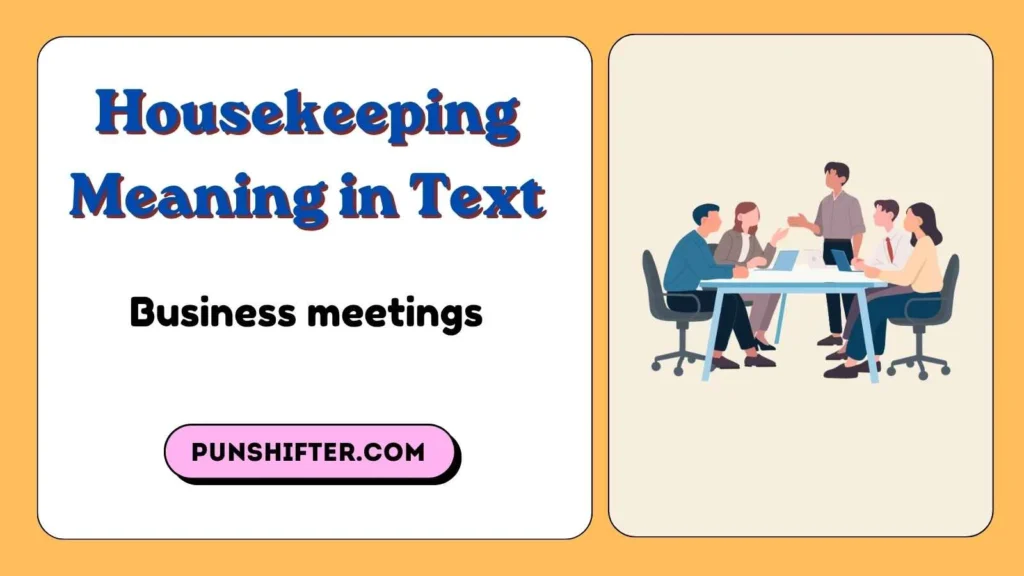
In text communication, housekeeping usually refers to handling small but important organizational matters before moving on to the main topic.
For example, during a meeting someone might say:
“Before we begin, let’s cover a few housekeeping items.”
In this situation, housekeeping means reminders, updates, rules, announcements, or logistical details.
The term is commonly used in:
- Workplace chats
- Business meetings
- School discussions
- Online webinars
- Group messages
- Community forums
Instead of referring to cleaning, it means “taking care of necessary details.”
Quick Examples
- “A little housekeeping before the event starts.”
- “Let’s finish some housekeeping tasks first.”
- “Just a housekeeping reminder about tomorrow’s deadline.”
The idea is simple: organize everything before focusing on the main subject.
Full Form Stands For & Short Meaning of Housekeeping
Unlike internet abbreviations such as LOL or BRB, housekeeping is not an acronym and does not have a full form.
Short Meaning
Housekeeping = organizational tasks, reminders, maintenance, or administrative details.
In communication, the word often means:
- Important reminders
- Routine maintenance
- Administrative updates
- General organization
- Necessary preparation
What It Stands For in Different Contexts
| Context | Meaning |
|---|---|
| Text Messages | Reminders or organizational notes |
| Meetings | Announcements before discussion |
| Business | Administrative tasks |
| Technology | System maintenance |
| Home | Cleaning and upkeep |
| Education | Classroom updates and instructions |
Although the meaning changes slightly, the core idea remains the same: keeping things organized and running smoothly.
Origin History & First Known Use of Housekeeping
The word housekeeping has existed for centuries.
Originally, it referred to managing a household, including:
- Cleaning
- Cooking
- Maintenance
- Budgeting
- Daily responsibilities
The term comes from combining:
- House
- Keeping (maintaining or managing)
Over time, people began using the word metaphorically.
Instead of maintaining a house, organizations started using it to describe maintaining systems, procedures, projects, and meetings.
By the late twentieth century, business professionals commonly used phrases such as:
- “Housekeeping notes”
- “Housekeeping items”
- “Administrative housekeeping”
Today, the term appears everywhere from Zoom meetings to social media groups and workplace messaging platforms.
How People Use Housekeeping in Daily Conversations
Many people use housekeeping without realizing it has become a business and internet phrase.
Common Daily Uses
At Work
“Just a bit of housekeeping before we start the presentation.”
At School
“Some housekeeping reminders about next week’s assignment.”
At Home
“We need to do some housekeeping this weekend.”
In Group Chats
“Quick housekeeping note: please update your availability.”
Why People Use It
The term sounds professional and organized.
Instead of saying:
- Reminders
- Administrative tasks
- Minor details
People simply say:
- Housekeeping
This makes communication shorter and more efficient.
Housekeeping Meaning Across WhatsApp Instagram TikTok & Snapchat
The meaning of housekeeping can vary slightly depending on the platform.
In WhatsApp groups, housekeeping usually means reminders or group management.
Examples:
- “Housekeeping reminder: meeting starts at 8 PM.”
- “Quick housekeeping note, please avoid spam messages.”
Creators may use housekeeping when sharing updates.
Example:
- “A little housekeeping before today’s announcement.”
This usually introduces rules, updates, or important information.
TikTok
TikTok creators often use the term before explaining something.
Example:
- “Some housekeeping first—check the link in my bio.”
It acts as a brief organizational introduction.
Snapchat
On Snapchat, the term appears less often but may still refer to updates or reminders.
Example:
- “Housekeeping: tomorrow’s plans changed.”
Across all platforms, the meaning remains centered on organization and preparation.
Different Meanings of Housekeeping in Other Fields
Housekeeping isn’t limited to texting or social media.
Hospitality Industry
In hotels, housekeeping refers to:
- Room cleaning
- Laundry services
- Guest room maintenance
Technology
In IT, housekeeping means:
- Removing unnecessary files
- Database cleanup
- Software maintenance
- System optimization
Healthcare
Hospitals use housekeeping for:
- Cleaning procedures
- Sanitation tasks
- Safety maintenance
Business
Corporate housekeeping includes:
- Filing documents
- Updating records
- Administrative tasks
Education
Teachers may use housekeeping to discuss:
- Attendance
- Classroom rules
- Assignment reminders
Common Confusions Mistakes & Wrong Interpretations
People often misunderstand housekeeping because they assume it always means cleaning.
Mistake #1: Thinking It Only Means Cleaning
Wrong:
“They’re talking about cleaning.”
Correct:
“They’re discussing organizational matters.”
Mistake #2: Assuming It’s Slang
Housekeeping isn’t internet slang.
It’s a standard English term used professionally.
Mistake #3: Missing the Context
The meaning changes based on where it appears.
For example:
- Hotel housekeeping = cleaning staff
- Meeting housekeeping = reminders and logistics
- IT housekeeping = system maintenance
Always look at the surrounding conversation.
Similar Terms Alternatives & Related Slang
Several words can replace housekeeping depending on the situation.
Similar Terms
- Administrative tasks
- Maintenance
- Organization
- Logistics
- Updates
- Reminders
- Preparation
- Coordination
Related Expressions
- Quick reminder
- Before we begin
- Administrative note
- Important update
- Logistics update
Useful Alternatives
Instead of saying housekeeping, someone might say:
- “A few updates.”
- “Some reminders.”
- “Let’s cover the basics first.”
- “A quick announcement.”
Examples of Housekeeping in Real Chat Situations
Here are some realistic examples.
Workplace Chat
Manager: “Quick housekeeping item: submit reports by Friday.”
Team Meeting
Host: “Before we start, a few housekeeping notes.”
WhatsApp Group
Admin: “Housekeeping reminder 😊 Please keep discussions on topic.”
School Chat
Teacher: “Housekeeping announcement: assignment due Monday.”
Family Group
Parent: “Housekeeping note—don’t forget dinner at 7 PM.”
Event Planning
Organizer: “A little housekeeping before the event begins.”
These examples show how the term focuses on organization rather than cleaning.
How to Reply When Someone Says Housekeeping
Your response depends on the context.
If It’s a Reminder
Reply:
- “Got it.”
- “Thanks for the update.”
- “Understood.”
If It’s an Announcement
Reply:
- “Thanks for letting us know.”
- “I’ll keep that in mind.”
If It’s a Meeting Note
Reply:
- “Sounds good.”
- “Ready to continue.”
Example Conversation
Host: “A few housekeeping notes before we start.”
You: “Sure, go ahead.”
or
You: “Thanks for the reminder.”
Simple and polite responses work best.
Is Housekeeping Still Popular? Trends & Online Usage
Yes, housekeeping remains widely used in 2026.
The rise of:
- Remote work
- Online meetings
- Virtual conferences
- Group messaging apps
has actually increased its usage.
Professionals regularly use phrases such as:
- Housekeeping items
- Housekeeping notes
- Housekeeping reminders
The term continues to appear on:
- Zoom
- Microsoft Teams
- Slack
- Discord
- Online webinars
Although younger users may choose words like “update” or “FYI,” housekeeping remains a common and respected expression.
Internal Linking Suggestions
To strengthen SEO and improve user navigation, consider linking to related articles such as:
- What Does FYI Mean in Text?
- BRB Meaning in Chat
- IMO Meaning Explained
- PMO Meaning in Text
- WFY Meaning on Social Media
- AFK Meaning in Gaming
- How to Understand Internet Slang
Why Businesses Frequently Use the Term Housekeeping
Businesses use the word housekeeping because it sounds professional and organized. Instead of listing several small administrative tasks separately, employees can group them under one term. This helps meetings stay structured and ensures everyone receives important information before discussing larger topics.
Common business housekeeping topics include:
- Schedule changes
- Project updates
- Policy reminders
- Attendance information
- Team announcements
Using the term creates a smoother transition into the main discussion.
Housekeeping in Virtual Meetings and Video Conferences
Since remote work became common, housekeeping has become a standard part of online meetings. Hosts often begin with housekeeping instructions to avoid confusion later.
Typical virtual meeting housekeeping includes:
- Muting microphones when not speaking
- Using the chat feature for questions
- Explaining recording policies
- Sharing meeting agendas
- Mentioning break times
These instructions help meetings run more efficiently and reduce interruptions.
Psychological Benefits of Housekeeping Messages
Housekeeping messages may seem simple, but they serve an important purpose. They provide clarity and help participants understand expectations.
Benefits include:
- Reduced confusion
- Better organization
- Improved communication
- Fewer misunderstandings
- Increased productivity
When people know the rules and expectations upfront, they can focus more effectively on the main conversation.
Housekeeping as a Sign of Professional Communication
Professionals often use housekeeping language because it demonstrates preparation and attention to detail.
For example, compare these statements:
Less Professional:
“Before we start, I have a bunch of random things to mention.”
More Professional:
“Let’s cover a few housekeeping items before we begin.”
The second version sounds more organized and polished, which is why it is common in business environments.
Housekeeping in Online Communities and Forums
Moderators of online communities frequently post housekeeping updates to keep discussions organized.
Examples include:
- Community rule reminders
- Posting guidelines
- Event announcements
- Membership updates
- Moderation changes
These housekeeping notices help maintain a positive and organized environment for members.
Cultural Differences in Understanding Housekeeping
The meaning of housekeeping can vary slightly between countries and cultures.
In some regions, people immediately associate it with:
- Hotel services
- Domestic cleaning
- Household management
In professional settings, however, the term is often understood as administrative organization regardless of location.
This difference can sometimes confuse people who encounter the term in workplace communication for the first time.
Housekeeping in Email Communication
Emails often contain housekeeping information at the beginning or end of a message.
Examples include:
- Deadline reminders
- Updated contact information
- Meeting links
- Policy changes
- Document requests
Including housekeeping details in emails helps ensure recipients receive critical information without missing important updates.
When Not to Use the Term Housekeeping
Although useful, the term isn’t appropriate in every situation.
Avoid using housekeeping when:
- Giving urgent warnings
- Discussing emergencies
- Delivering sensitive information
- Communicating serious complaints
In these cases, direct language is usually clearer and more effective than labeling information as housekeeping.
Housekeeping vs Administrative Tasks
Many people use these terms interchangeably, but they are not exactly the same.
Housekeeping
- Broad organizational activities
- Reminders and updates
- General maintenance
Administrative Tasks
- Specific office responsibilities
- Documentation
- Scheduling
- Record management
Administrative tasks can be part of housekeeping, but housekeeping covers a wider range of organizational activities.
Housekeeping in Project Management
Project managers often perform housekeeping activities to keep projects on track.
Examples include:
- Updating task lists
- Reviewing deadlines
- Removing outdated information
- Organizing project files
- Confirming responsibilities
These small actions prevent larger problems later in the project lifecycle.
Why the Word Housekeeping Remains Relevant in the Digital Age
Despite the rise of modern internet slang, housekeeping continues to be widely used because it communicates a clear concept in a single word.
It remains popular because:
- It’s professional.
- It’s easy to understand.
- It works across industries.
- It applies to both online and offline situations.
- It saves time during communication.
As workplaces become increasingly digital, the need for organizational communication keeps the term relevant.
Funny and Lighthearted Uses of Housekeeping
Sometimes people use housekeeping humorously in casual conversations.
Examples:
- “Housekeeping reminder 😂: return my charger.”
- “Weekend housekeeping: clean room, survive laundry, repeat.”
- “Relationship housekeeping—we need to decide where to eat tonight.”
In these situations, the term is used playfully to make ordinary reminders sound more official.
Housekeeping Terms You Might Hear Alongside It
If you see housekeeping in a professional setting, you may also encounter related terms such as:
- Agenda
- Action items
- Announcements
- Logistics
- Updates
- Meeting notes
- Follow-ups
- Reminders
- Operational updates
- Administrative notices
FAQs
What does housekeeping mean in a text message?
It usually refers to reminders, updates, organizational details, or administrative information.
Is housekeeping an abbreviation?
No. Housekeeping is a regular English word and not an acronym.
Why do meeting hosts say housekeeping?
They use it to cover announcements, rules, reminders, or logistical information before starting.
Does housekeeping always mean cleaning?
No. In modern communication, it often means organizational or administrative tasks.
What does housekeeping mean on social media?
It usually introduces updates, reminders, rules, or important information for followers.
Is housekeeping formal or informal?
It can be both. It’s commonly used in professional environments but also appears in casual group chats.
Is housekeeping still commonly used?
Yes. It’s widely used in workplaces, virtual meetings, online communities, and messaging apps.
Conclusion
Understanding the housekeeping meaning in text is easier once you know the context. While the word originally referred to managing and cleaning a household modern communication uses it to describe reminders updates administrative tasks and organizational details.
Whether you encounter it in a workplace meeting WhatsApp group webinar school discussion or social media post housekeeping generally means handling important information before moving on to the main topic.
The next time someone says Just a quick housekeeping note you’ll know they’re not talking about cleaning. They’re simply making sure everyone has the information they need so things stay organized and run smoothly

Hi, I’m Julia Mark, the creator and writer behind Punshifter.
Punshifter started as a fun idea to turn everyday words into clever humor. I’ve always enjoyed playing with language, and puns felt like the perfect way to mix creativity with laughter. Through Punshifter, I share original puns, witty jokes, and playful word combinations designed to make people smile.
I focus on creating original, easy-to-read, and lighthearted content that anyone can enjoy. Every piece on Punshifter is written with care, creativity, and a love for clever wordplay.
Thanks for being part of the Punshifter community and enjoying the humor with me.
— Julia Mark