If you’ve ever received a message that simply says YW you may have wondered what it means. Short text abbreviations have become a normal part of online communication. Whether you’re chatting with friends texting family members or scrolling through social media you’ll often come across short forms that save time and effort.
One of the most common abbreviations is YW. Despite being only two letters long it carries an important meaning in digital conversations. People use it every day on messaging apps social platforms gaming chats, and even professional conversations.
In this guide you’ll learn exactly what YW means in text, where it came from how people use it and how it compares to similar internet slang. You’ll also see real chat examples and discover whether this abbreviation is still popular today.
What Does YW Mean in Text & Chat?
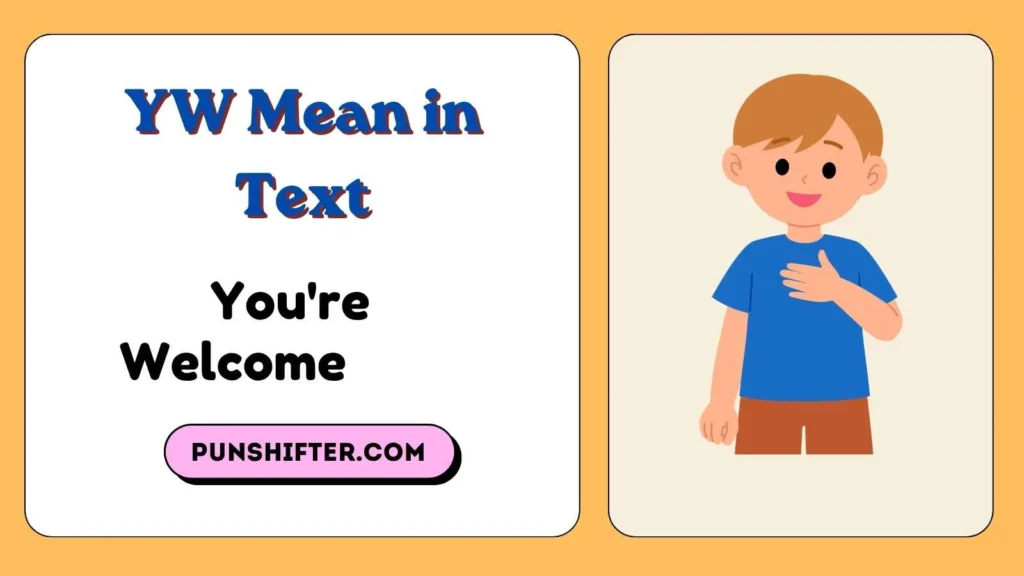
In texting and online conversations, YW most commonly means:
“You’re Welcome.”
People use it as a quick response after someone says “thank you” or “thanks.”
Instead of typing the full phrase, users shorten it to YW to save time. Since texting is often fast and informal, abbreviations like this make communication easier.
Quick Examples
- Person A: “Thanks for helping me.”
- Person B: “YW!”
- Person A: “Thank you for the notes.”
- Person B: “YW 😊”
- Person A: “Thanks for the ride.”
- Person B: “YW, anytime.”
The abbreviation is friendly, polite, and widely understood across most online platforms.
Why People Use YW
People use YW because it is:
- Short and convenient
- Easy to type
- Friendly and polite
- Commonly recognized
- Perfect for casual chats
In most situations, YW carries the same meaning as saying “You’re welcome” in person.
Full Form Stands For & Short Meaning of YW
The full form of YW is:
You’re Welcome
This phrase is traditionally used as a polite response when someone thanks you.
Breakdown
- Y = You’re
- W = Welcome
When combined, they create the abbreviation YW.
Short Meaning
The simple meaning of YW is:
“No problem.”
“Happy to help.”
“You’re welcome.”
The exact tone depends on the conversation.
Similar Responses
Many people use YW interchangeably with:
- No problem
- Anytime
- Glad to help
- NP (No Problem)
- NBD (No Big Deal)
Although the wording differs, the purpose remains the same: acknowledging someone’s gratitude politely.
Origin History & First Known Use of YW
YW emerged during the early growth of internet messaging and mobile texting.
In the late 1990s and early 2000s, people had limited character space in SMS messages. Mobile keypads were also slower than modern keyboards.
As a result, users began shortening common phrases.
Examples included:
- LOL (Laugh Out Loud)
- BRB (Be Right Back)
- TY (Thank You)
- YW (You’re Welcome)
Since “You’re welcome” is one of the most common responses in conversation, it naturally became abbreviated.
Early Platforms
YW appeared frequently on:
- SMS text messages
- AOL Instant Messenger (AIM)
- Yahoo Messenger
- MSN Messenger
- IRC chat rooms
As social media expanded, YW moved onto newer platforms and remained popular.
Today, it is considered one of the classic internet abbreviations that most users instantly recognize.
How People Use YW in Daily Conversations
YW is used whenever someone expresses appreciation.
The abbreviation fits naturally into both casual and semi-formal conversations.
Everyday Situations
Someone thanks you for:
- Sharing information
- Giving directions
- Offering advice
- Sending a file
- Helping with homework
- Providing support
In these cases, YW serves as a quick acknowledgment.
Examples
- “Thanks for sending the document.”
- “YW.”
- “Thank you for explaining that.”
- “YW!”
- “Thanks for covering my shift.”
- “YW, happy to help.”
Tone Variations
YW can sound:
- Friendly
- Casual
- Polite
- Warm
- Neutral
Adding emojis often changes the tone.
Examples:
- YW 😊
- YW 👍
- YW ❤️
- YW 😄
These small additions make the response feel more personal.
YW Meaning Across WhatsApp, Instagram, TikTok & Snapchat
The meaning of YW stays mostly the same across different platforms.
On WhatsApp, YW usually means “You’re welcome.”
Example:
- “Thanks for the photos.”
- “YW 😊”
Users often reply with YW in:
- Direct messages
- Story replies
- Comment discussions
Example:
- “Thanks for following back!”
- “YW.”
TikTok
TikTok users sometimes use YW in comments when responding to appreciation.
Example:
- “Thanks for posting this tutorial.”
- “YW ❤️”
Snapchat
Snapchat conversations are usually fast and informal, making abbreviations extremely common.
Example:
- “Thanks for the snap.”
- “YW 😄”
Across all platforms, the meaning remains consistent and easy to understand.
Different Meanings of YW in Other Fields
Although “You’re Welcome” is the most common meaning, YW can occasionally represent other phrases depending on context.
Business and Organizations
YW may stand for:
- Youth Work
- Youth Wing
- Young Women
Travel
Some airline and transportation codes may use YW as an identifier.
Technical Contexts
In specialized industries, abbreviations can have unique meanings.
However, when seen in a text message, social media comment, or online chat, YW almost always means:
“You’re Welcome.”
Context is the key to understanding the correct meaning.
Common Confusions, Mistakes & Wrong Interpretations
Many people encounter YW for the first time and become confused.
Common Mistakes
Thinking It Means “Yes Way”
Some users incorrectly assume YW means:
- Yes way
- Your words
- You win
These meanings are uncommon.
Confusing YW with WY
Because the letters are reversed, users sometimes mix up:
- YW
- WY
The two abbreviations are not interchangeable.
Assuming It Has a Hidden Meaning
Unlike some internet slang, YW is very straightforward.
Most of the time, there is no secret interpretation involved.
How to Avoid Confusion
Look at the previous message.
If someone has just said “thank you,” then YW almost certainly means:
“You’re Welcome.”
Similar Terms Alternatives & Related Slang
Several abbreviations serve a similar purpose.
Popular Alternatives
NP
Meaning:
No Problem
Example:
- “Thanks!”
- “NP.”
NBD
Meaning:
No Big Deal
Example:
- “Thank you.”
- “NBD.”
Anytime
A friendly alternative to YW.
Example:
- “Thanks!”
- “Anytime.”
Glad to Help
Slightly more personal and warm.
Example:
- “Thank you.”
- “Glad to help.”
Related Texting Abbreviations
You may also encounter:
- TY = Thank You
- TYSM = Thank You So Much
- THX = Thanks
- IDC = I Don’t Care
- IMO = In My Opinion
- TBH = To Be Honest
These abbreviations often appear in the same types of conversations as YW.
Examples of YW in Real Chat Situations
Here are realistic examples showing how YW appears in conversations.
1
- Sarah: “Thanks for the recommendation.”
- Jake: “YW 😊”
2
- Alex: “Thank you for helping me study.”
- Emma: “YW!”
3
- Friend: “Thanks for the screenshots.”
- You: “YW 👍”
- Example 4
- Coworker: “Thanks for sending that file.”
- You: “YW, let me know if you need anything else.”
5
- Gamer: “Thanks for the tips.”
- Player: “YW 😄”
These examples show how natural and versatile the abbreviation can be.
How to Reply When Someone Says YW
When someone replies with YW, the conversation can end naturally or continue.
Possible Responses
- You’re welcome too!
- Appreciate it.
- Thanks again.
- Will do.
- Got it.
- Sounds good.
- Have a great day.
Example
- You: “Thanks for helping.”
- Friend: “YW.”
- You: “Really appreciate it.”
Or:
- You: “Thank you!”
- Friend: “YW 😊”
- You: “You’re the best!”
Most conversations end comfortably after YW because it serves as a closing acknowledgment.
Is YW Still Popular? Trends & Online Usage
Yes, YW remains popular in 2026.
While newer slang terms appear every year, classic abbreviations continue to survive because they are simple and useful.
Why It Remains Popular
- Easy to type
- Universally understood
- Works across platforms
- Saves time
- Friendly and polite
Modern Trends
Younger users sometimes prefer:
- No worries
- Anytime
- Of course
- Happy to help
However, YW still appears frequently in:
- Text messages
- WhatsApp chats
- Snapchat conversations
- Gaming communities
- Social media comments
Because it serves a practical purpose, it is unlikely to disappear anytime soon.
Internal Linking Suggestions
Consider linking this article to related abbreviation guides such as:
- What Does TY Mean in Text?
- What Does TBH Mean?
- What Does IMO Mean?
- What Does SMH Mean?
- What Does BRB Mean?
- What Does IDK Mean?
- What Does NGL Mean?
These related topics help readers understand internet slang more easily.
FAQs:
What does YW mean in texting?
YW stands for “You’re Welcome.” It is commonly used after someone says thank you.
Is YW rude?
No. YW is generally considered polite and friendly. However, some people may prefer the full phrase in formal situations.
What is the full form of YW?
The full form of YW is “You’re Welcome.”
Can YW have other meanings?
Yes, in certain industries or organizations it may have different meanings. In texting, it almost always means “You’re Welcome.”
Is YW still used today?
Yes. YW remains widely used across texting apps, social media platforms, and online chats.
Should I use YW in professional emails?
In professional emails, writing the full phrase “You’re welcome” is usually more appropriate than using the abbreviation.
What emoji goes well with YW?
Common choices include:
- 😊
- 👍
- 😄
- ❤️
These emojis make the response feel warmer and friendlier.
Conclusion:
YW is one of the simplest and most useful abbreviations found in modern digital communication. In most cases it stands for You’re Welcome and serves as a polite response when someone expresses gratitude.
Despite the rise of new internet slang, YW continues to be widely recognized because it is quick clear and easy to understand.
Whether you’re chatting on WhatsApp Instagram TikTok,Snapchat or traditional text messages, you’ll likely encounter YW regularly. Understanding its meaning helps you communicate more naturally and confidently online.
The next time someone thanks you, you can reply with a simple YW and know that you’re using one of the internet’s most enduring and widely accepted abbreviations

Hi, I’m Julia Mark, the creator and writer behind Punshifter.
Punshifter started as a fun idea to turn everyday words into clever humor. I’ve always enjoyed playing with language, and puns felt like the perfect way to mix creativity with laughter. Through Punshifter, I share original puns, witty jokes, and playful word combinations designed to make people smile.
I focus on creating original, easy-to-read, and lighthearted content that anyone can enjoy. Every piece on Punshifter is written with care, creativity, and a love for clever wordplay.
Thanks for being part of the Punshifter community and enjoying the humor with me.
— Julia Mark