If you’ve spent any time texting scrolling through social media or chatting online you’ve probably come across the abbreviation IDC.
It appears in text messages comments captions gaming chats and even workplace conversations. Many people search for what does IDC mean in text because internet slang changes quickly and it can be confusing to keep up with new abbreviations.
The good news is that IDC is one of the easier slang terms to understand. Depending on the situation it can express indifference lack of concern,or a relaxed attitude toward something. While the abbreviation is short its tone can vary from casual and friendly to dismissive and rude.
In this guide you’ll learn the meaning of IDC, where it came from how people use it on different social media platforms, common mistakes, examples and whether it’s still popular today.
What Does IDC Mean in Text?
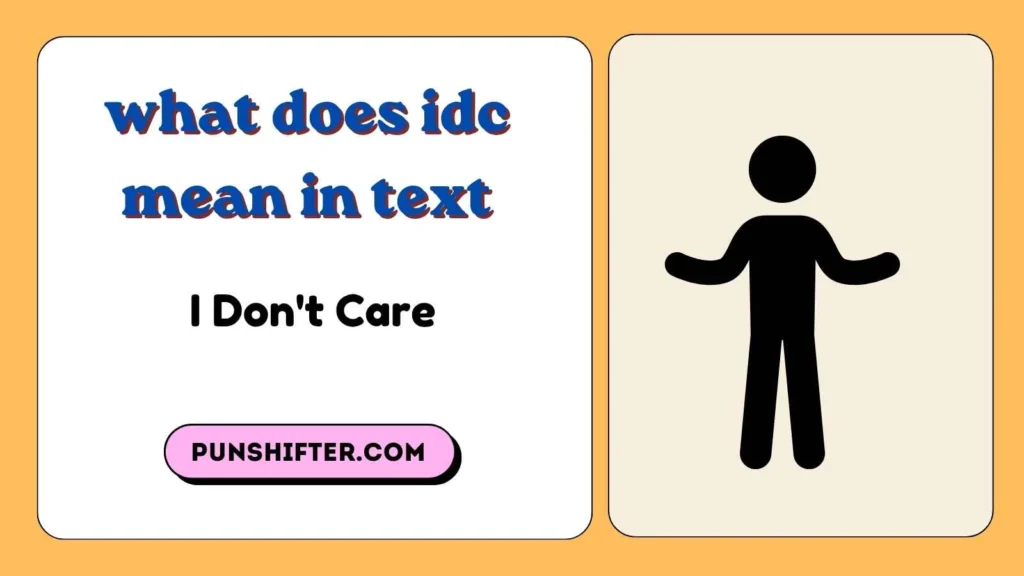
In text messaging, IDC usually means “I Don’t Care.”
People use it when they are not concerned about a particular topic, decision, outcome, or opinion. The phrase helps save time while texting and allows users to communicate their feelings quickly.
For example:
- “Where do you want to eat?”
- “IDC, you choose.”
In this situation, the person is happy with any choice.
However, context matters. Sometimes IDC can sound relaxed and flexible, while other times it can seem rude or uninterested.
Quick Examples
- IDC what movie we watch.
- IDC about the score anymore.
- IDC if it rains tomorrow.
- IDC, let’s just go.
- IDC 😂 it’s not a big deal.
Because tone is difficult to read in text messages, some people add emojis or extra words to make their meaning clearer.
Full Form, Stands For & Short Meaning of IDC
The full form of IDC is:
IDC = I Don’t Care
Short Meaning
The abbreviation simply communicates:
- Indifference
- Lack of concern
- Flexibility
- Disinterest
- Neutral feelings
Depending on context, it can mean:
- “It doesn’t matter to me.”
- “I’m okay with any option.”
- “I’m not worried about it.”
- “I have no strong opinion.”
Different Tones of IDC
Friendly IDC
- “IDC where we go for lunch.”
Relaxed IDC
- “IDC honestly, either option works.”
Annoyed IDC
- “IDC anymore. Do whatever you want.”
Dismissive IDC
- “IDC what they think.”
Because tone changes everything, understanding the conversation is important before interpreting the abbreviation.
Origin, History & First Known Use of IDC
IDC emerged during the early years of internet communication when people began shortening common phrases to type faster.
The abbreviation became popular through:
- SMS texting
- Internet chat rooms
- Online forums
- Instant messaging platforms
- Gaming communities
During the late 1990s and early 2000s, character limits encouraged users to shorten phrases whenever possible. Similar abbreviations such as:
- LOL
- BRB
- IDK
- IMO
- TBH
became common, and IDC followed the same trend.
As smartphones and social media platforms expanded, IDC spread to younger generations and became part of everyday digital communication.
Today, it remains one of the most recognized texting abbreviations across the internet.
How People Use IDC in Daily Conversations
People use IDC in many everyday situations. Usually, it appears when someone wants to express that a choice, outcome, or opinion is not especially important to them.
Choosing Between Options
- Friend: “Pizza or burgers?”
- You: “IDC.”
Showing Flexibility
- “IDC where we sit.”
- “IDC which route we take.”
Expressing Frustration
- “IDC anymore. I’m done arguing.”
Ignoring Opinions
- “IDC what strangers think.”
Casual Conversations
- “IDC honestly. Both are good.”
Common Chat Examples
- “IDC, your choice.”
- “IDC either way.”
- “IDC tbh.”
- “IDC lol.”
- “IDC 😂”
The abbreviation is extremely versatile because it fits many different types of conversations.
IDC Meaning Across WhatsApp, Instagram, TikTok & Snapchat
Social media users often use IDC slightly differently depending on the platform.
On WhatsApp, IDC typically means:
- I don’t mind
- I don’t care
- Either option is fine
Example:
- “Should we meet at 5 or 6?”
- “IDC.”
Instagram users often use IDC in comments and captions.
Examples:
- “IDC what people say.”
- “IDC, I’m happy.”
TikTok
On TikTok, IDC is frequently used in trends, videos, and comment sections.
Examples:
- “IDC this song is amazing.”
- “IDC if it’s unpopular.”
Snapchat
Snapchat conversations are usually casual and fast-paced.
Examples:
- “IDC 😂”
- “IDC bro.”
- “IDC, let’s go.”
Across all platforms, the meaning remains mostly the same: a lack of concern or strong preference.
Different Meanings of IDC in Other Fields
Although IDC usually means “I Don’t Care” in texting, it can have different meanings in professional and technical fields.
Technology
IDC may refer to:
Insulation Displacement Connector
A common electrical connector used in electronics.
Business
IDC can stand for:
International Data Corporation
A well-known market intelligence and technology research company.
Healthcare
In some medical settings, IDC may refer to specific clinical terms depending on context.
Education & Research
Certain institutions and programs use IDC as an acronym for their own departments or organizations.
Why Context Matters
If you’re reading a text message from a friend, IDC almost certainly means “I Don’t Care.”
If you’re reading a business report, it may mean something completely different.
Common Confusions, Mistakes & Wrong Interpretations
Many people misunderstand IDC because they focus only on the words and not the tone.
Mistake #1: Thinking IDC Is Always Rude
Not necessarily.
Example:
- “IDC where we eat.”
This often means flexibility rather than disrespect.
Mistake #2: Confusing IDC With IDK
These abbreviations are very different.
IDC
- I Don’t Care
IDK
- I Don’t Know
Example:
- IDK = “I don’t know the answer.”
- IDC = “I don’t care about the answer.”
Mistake #3: Assuming Anger
Sometimes IDC simply means:
- “Either choice is fine.”
Mistake #4: Ignoring Context
The surrounding conversation often reveals whether IDC is casual, neutral, frustrated, or dismissive.
Similar Terms, Alternatives & Related Slang
Many abbreviations have meanings similar to IDC.
Common Alternatives
- IDK = I Don’t Know
- TBH = To Be Honest
- NVM = Never Mind
- IMO = In My Opinion
- SMH = Shaking My Head
- BRB = Be Right Back
Similar Phrases
- Doesn’t matter
- Whatever
- Up to you
- Either way
- No preference
- I’m fine with anything
Internal Linking Suggestions
You can link this article to related guides such as:
- What Does IDK Mean in Text?
- What Does TBH Mean?
- What Does IMO Mean?
- What Does NVM Mean?
- What Does SMH Mean?
These abbreviations are often searched together.
Examples of IDC in Real Chat Situations
Here are realistic examples showing how people use IDC.
Example 1
Friend: “Which movie should we watch?”
You: “IDC, pick your favorite.”
Example 2
Friend: “Do you want red or blue?”
You: “IDC honestly.”
Example 3
Friend: “People are criticizing your post.”
You: “IDC 😂”
Example 4
Friend: “Should we leave now?”
You: “IDC, whenever you’re ready.”
Example 5
Friend: “What do they think?”
You: “IDC what they think.”
These examples show how the abbreviation can sound relaxed, confident, or dismissive depending on context.
How to Reply When Someone Says IDC
The best response depends on the conversation.
If They’re Flexible
You can simply choose.
- “Okay, let’s go with pizza.”
- “Great, I’ll decide.”
If They Sound Frustrated
You might respond with empathy.
- “Are you okay?”
- “You seem upset.”
If They’re Joking
Keep the conversation light.
- “Haha, fair enough.”
- “Works for me.”
If They’re Dismissive
Ask for clarification.
- “Do you really not care?”
- “What’s your preference?”
Understanding tone helps prevent misunderstandings.
Is IDC Still Popular? Trends & Online Usage
Yes, IDC remains very popular.
Even though internet slang changes constantly, IDC has survived for decades because it is:
- Short
- Easy to remember
- Useful in many situations
- Understood by multiple generations
Today, you’ll still find IDC on:
- TikTok
- Snapchat
- Discord
- X
- Gaming chats
Unlike many temporary slang terms that disappear after a few years, IDC continues to be widely recognized.
Its simplicity and practicality make it one of the most durable internet abbreviations.
Why IDC Became One of the Most Common Internet Abbreviations
IDC gained popularity because it communicates a complete thought in just three letters. In fast-paced digital conversations, people prefer shortcuts that save time while still conveying emotion. Unlike many slang terms that fade away, IDC remains relevant because everyone experiences situations where they feel neutral, uninterested, or flexible.
Reasons People Prefer Using IDC
- Faster than typing “I don’t care”
- Widely recognized across age groups
- Works in casual and serious conversations
- Easy to understand regardless of platform
The Emotional Tone Behind IDC
Although IDC always means “I Don’t Care,” the emotional meaning can change dramatically depending on the situation.
Neutral Tone
Used when someone genuinely has no preference.
Example:
- “IDC which seat we take.”
Confident Tone
Used when someone refuses to worry about criticism.
Example:
- “IDC what people think of my style.”
Frustrated Tone
Used after repeated arguments or disappointments.
Example:
- “IDC anymore. I’m done discussing it.”
Understanding emotional context helps avoid misunderstandings.
When You Should Avoid Using IDC
While IDC is common, it isn’t appropriate in every situation.
Professional Communication
Using IDC in workplace emails or business messages may appear careless or unprofessional.
Instead of saying:
- “IDC about the meeting.”
Try:
- “I have no preference regarding the schedule.”
Sensitive Conversations
When discussing serious topics, IDC may seem dismissive and hurtful.
Examples include:
- Family issues
- Personal struggles
- Emotional discussions
- Workplace concerns
How IDC Is Used in Online Gaming Communities
Gaming culture helped popularize many internet abbreviations, including IDC.
Players often use IDC when discussing:
- Character selections
- Team strategies
- Match outcomes
- In-game rewards
Gaming Examples
- “IDC who plays support.”
- “IDC about the ranking.”
- “IDC, let’s start the match.”
Because gaming chats move quickly, short abbreviations are especially useful.
IDC in Group Chats vs One-on-One Conversations
The meaning of IDC can shift depending on who is involved in the conversation.
In Group Chats
IDC often signals flexibility.
Example:
- “Where should we meet?”
- “IDC, anywhere works.”
In Private Messages
IDC can carry stronger emotional weight.
Example:
- “Do you still want to talk about this?”
- “IDC.”
In private conversations, it may suggest frustration, boredom, or emotional distance.
Generational Differences in Using IDC
Different age groups use IDC in slightly different ways.
Teenagers
Often use IDC casually and frequently.
Examples:
- “IDC lol.”
- “IDC 😂”
Young Adults
Use it for convenience and efficiency in texting.
Older Users
May use the full phrase “I don’t care” more often than the abbreviation.
These differences can affect how the message is interpreted.
IDC in Memes, Viral Posts, and Internet Culture
IDC frequently appears in meme culture because it expresses confidence and independence.
Popular meme captions include:
- “IDC if it’s unpopular.”
- “IDC what anyone says.”
- “IDC, this is my favorite.”
These posts often encourage people to embrace their opinions regardless of public criticism.
Psychological Meaning Behind Saying IDC
Sometimes IDC reflects more than simple indifference.
It may indicate:
Emotional Detachment
A person no longer feels invested in the outcome.
Decision Fatigue
Someone has made too many choices and prefers others to decide.
Self-Confidence
The speaker feels secure enough not to worry about outside opinions.
Frustration
The person may be tired of discussing the same issue repeatedly.
Variations and Extended Forms of IDC
People often modify IDC to create stronger or softer meanings.
IDC Honestly
Adds sincerity.
Example:
- “IDC honestly, either option works.”
IDC Anymore
Suggests frustration or exhaustion.
Example:
- “IDC anymore. Just do whatever you want.”
IDC TBH
Combines two abbreviations for emphasis.
Example:
- “IDC tbh.”
IDC LOL
Makes the statement feel lighter and more playful.
Example:
- “IDC lol 😂”
How Brands and Influencers Use IDC Online
Many influencers use IDC to project confidence and authenticity.
Examples include captions such as:
- “IDC if it’s trendy or not.”
- “IDC what the critics say.”
- “IDC, I’m doing what makes me happy.”
This usage often resonates with audiences who value individuality and self-expression.
Will IDC Remain Popular in the Future?
Unlike many short-lived slang terms, IDC has qualities that help it survive changing internet trends.
Why IDC Has Lasting Power
- Simple meaning
- Universal usage
- Easy spelling
- Works across cultures
- Suitable for almost every social platform
Because it solves a common communication need, IDC is likely to remain part of online conversations for years to come.
FAQs
What does IDC mean in texting?
IDC stands for “I Don’t Care.” It is used to express indifference or a lack of preference.
Is IDC rude?
Not always. It can be friendly and flexible, but depending on tone and context, it may sound dismissive.
What is the difference between IDC and IDK?
IDC means “I Don’t Care,” while IDK means “I Don’t Know.”
What does IDC mean on Snapchat?
On Snapchat, IDC usually means “I Don’t Care” just as it does in regular texting.
Is IDC still commonly used?
Yes. IDC remains one of the most popular and widely understood texting abbreviations.
Can IDC mean something else?
Yes. In business and technology, IDC can refer to organizations, connectors, or other technical terms.
Should I use IDC in professional emails?
Generally no. It is considered informal slang and is better suited for casual conversations.
Conclusion
If you’ve been wondering what does IDC mean in text, the answer is simple: it usually stands for I Don’t Care.
The abbreviation is widely used in texting, social media, gaming, and online conversations to express indifference flexibility or a lack of concern.
While the phrase itself is straightforward the tone can vary greatly depending on the situation.
Sometimes IDC sounds friendly and relaxed, while other times it may come across as dismissive or frustrated.
Understanding context is the key to interpreting it correctly. Even after decades of internet slang evolution IDC remains one of the most commonly used abbreviations online, making it a useful term for anyone navigating modern digital communication.

Hi, I’m Julia Mark, the creator and writer behind Punshifter.
Punshifter started as a fun idea to turn everyday words into clever humor. I’ve always enjoyed playing with language, and puns felt like the perfect way to mix creativity with laughter. Through Punshifter, I share original puns, witty jokes, and playful word combinations designed to make people smile.
I focus on creating original, easy-to-read, and lighthearted content that anyone can enjoy. Every piece on Punshifter is written with care, creativity, and a love for clever wordplay.
Thanks for being part of the Punshifter community and enjoying the humor with me.
— Julia Mark